Firewall vs Antivirus: What Your Business Actually Needs
Many business owners assume that installing antivirus software is enough to protect their company. Others believe a firewall alone will stop cyber threats. In reality, firewalls and antivirus serve very different purposes, and relying on only one can leave serious security gaps.
Understanding the difference between a firewall and antivirus—and how they work together—is critical for protecting your business network, data, and daily operations.
Why Businesses Get This Wrong
Small and mid-sized businesses are frequent targets for cyber attacks, not because they’re careless, but because security is often misunderstood. Cybercriminals look for weak entry points such as:
- Unprotected networks
- Outdated security tools
- Misconfigured devices
- Overreliance on basic antivirus software
Knowing what each security tool does helps businesses make smarter decisions.
What Is a Firewall?
A firewall acts as a barrier between your internal network and the outside world. It monitors incoming and outgoing traffic and blocks anything that doesn’t meet your security rules.
What a Business Firewall Does:
- Prevents unauthorized access to your network
- Filters malicious traffic before it reaches devices
- Controls which services and applications can communicate
- Protects servers, workstations, and cloud connections
A properly configured firewall is the first line of defense for business network security.
What Is Antivirus Software?
Antivirus software runs directly on computers and servers. Its role is to detect, block, and remove malicious software that reaches a device.
What Antivirus Does:
- Scans files and programs for malware
- Blocks known viruses, ransomware, and spyware
- Helps clean infected systems
- Provides endpoint-level protection
Antivirus is important—but it works after threats reach a device, not before.
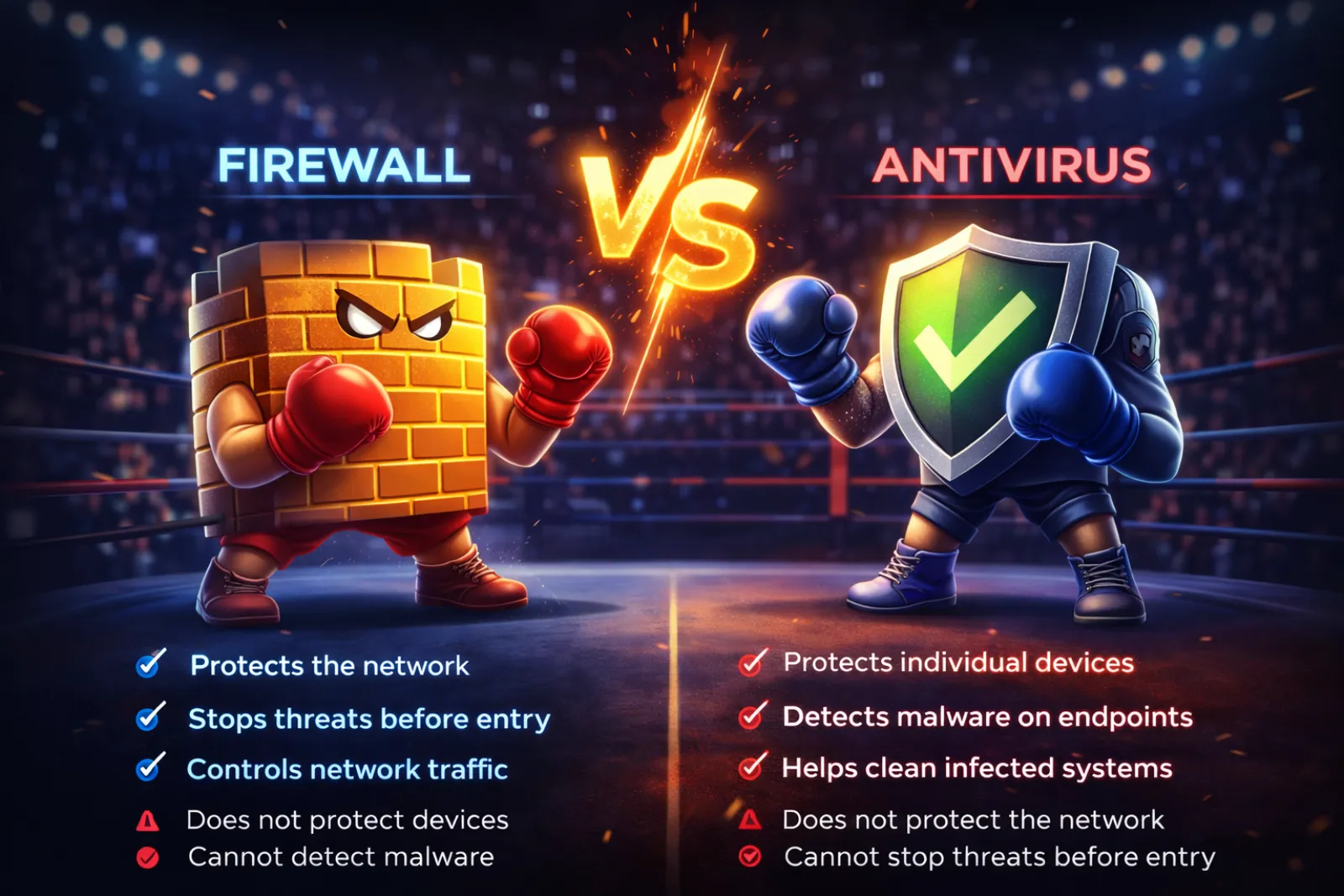
Firewall vs Antivirus: Key Differences
| Feature | Firewall | Antivirus |
|---|---|---|
| Protects the network | ✅ Yes | ❌ No |
| Protects individual devices | ❌ No | ✅ Yes |
| Stops threats before entry | ✅ Yes | ❌ No |
| Detects malware on endpoints | ❌ No | ✅ Yes |
| Controls network traffic | ✅ Yes | ❌ No |
This is why choosing one instead of the other is a mistake.
Why Businesses Need Both
Firewalls and antivirus are not competitors—they are complementary.
A firewall:
- Reduces the number of threats that ever reach your systems
Antivirus:
- Protects devices from threats that bypass or originate inside the network
Together, they form a layered security approach, which is the industry standard for business cybersecurity.
Common Mistakes Businesses Make
Many companies unintentionally leave themselves exposed by:
- Relying only on antivirus software
- Using consumer-grade routers instead of business firewalls
- Failing to monitor firewall activity
- Not updating antivirus definitions regularly
- Assuming cloud services don’t need network security
Security gaps often go unnoticed until a breach or outage occurs.
Why Firewall Management Matters
Installing a firewall is not enough. Without proper configuration and monitoring, a firewall can become ineffective.
Professional firewall management includes:
- Custom security rules
- Continuous monitoring
- Firmware updates
- Traffic analysis and alerts
This ensures your firewall actually protects your business instead of just sitting on the network.
Choosing the Right Security Setup for Your Business
The right solution depends on:
- Business size and industry
- Number of users and devices
- Remote access requirements
- Compliance and data sensitivity
Most businesses benefit from:
- A business-grade firewall
- Endpoint antivirus protection
- Network monitoring
- Ongoing IT security support
This combination dramatically reduces security risks and downtime.
Final Thoughts
Antivirus alone is not enough to protect a business network, and a firewall alone can’t stop every threat. Real business security requires both, working together as part of a layered defense strategy.
If you’re unsure whether your current setup is providing adequate protection, a professional network security assessment can identify gaps before they become costly problems.