Crypto Scam Alert: Physical Mail Phishing Targets Ledger & Trezor Wallet Users
Cryptocurrency security threats are constantly evolving — and recently attackers have taken their tactics to a new level by targeting users of popular hardware wallets like Trezor and Ledger with physical phishing letters sent through the mail. These scams are designed to trick victims into surrendering their private recovery phrases, putting their crypto assets at risk.
🔎 What Is Happening?
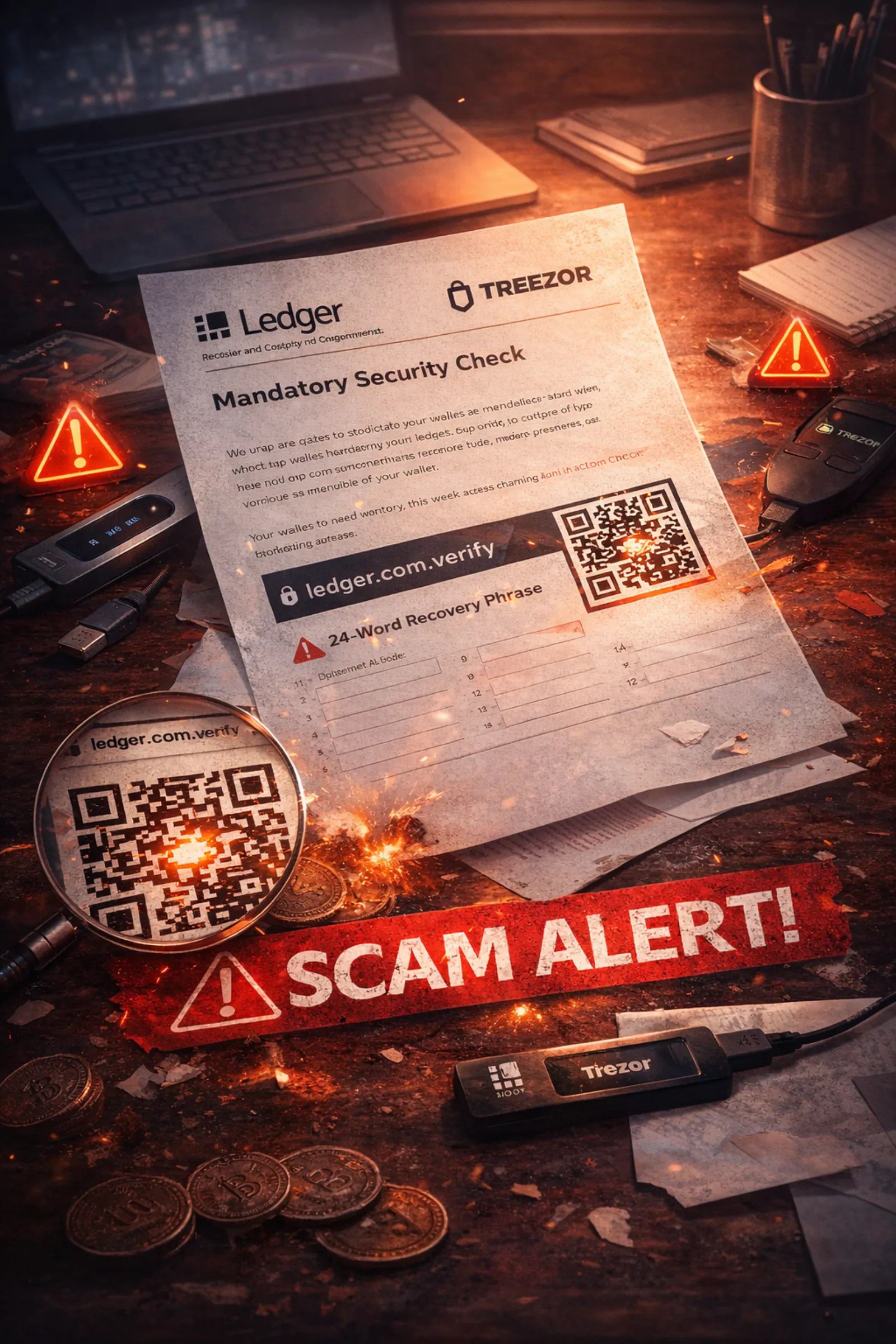
Traditionally, phishing scams arrive via email, SMS, or social media. But threat actors are now leveraging physical mail as a way to bypass digital filters and add a sense of legitimacy to their scams. These letters are printed on professional‑looking letterhead and mimic official communications from Trezor or Ledger’s “Security and Compliance” teams.
The scam letters often include a QR code that the recipient is instructed to scan to complete what the scammers call an “Authentication Check” or “Mandatory Transaction Verification.” The letter warns that failure to complete this process could result in restricted access to the wallet or loss of functionality.
Scanning the QR code takes victims to a phishing website that looks convincingly similar to the official Ledger or Trezor sites. The site will then prompt the user to enter their recovery phrase (24‑, 20‑, or 12‑word seed phrase) to “verify ownership.” Once submitted, that recovery phrase is transmitted to the attackers, allowing them to import the wallet on their own devices and steal the assets stored within.
📉 Why This Scam Is Effective
Physical mail has psychological impact — it makes the communication feel more authentic and trustworthy. Many users associate signed, printed letters with legitimate business communication, especially when paired with branding elements like logos and official headers. This is exactly what scammers exploit to lower suspicion.
Additionally, past data breaches have exposed customer contact information for companies like Ledger, meaning scammers may already have access to users’ mailing addresses, making it easier to target victims directly.
🛑 Red Flags: How to Spot a Scam Letter
Here are some clear signs that a letter might not be legitimate:
- Requests you to enter or scan your recovery phrase.
Legitimate wallet manufacturers never ask for your recovery phrase in physical mail, email, or via websites. - Sense of urgency or deadlines.
Scammers often try to create panic by warning of imminent loss of access or funds if action isn’t taken. - QR codes instead of official URLs.
While QR codes aren’t inherently dangerous, they can obfuscate malicious web addresses. Always verify manually. - Requests for recovery phrases on any website.
Recovery phrases should only ever be entered directly on your hardware wallet device when restoring your wallet — never online. - Official branding without verification.
Logos, letterhead, or professional formatting can be faked. Always verify through official support channels.
🛡️ How to Protect Your Crypto Assets
Protecting yourself from these physical mail scams is similar to defending against digital phishing attempts:
🔹 Never Share Your Recovery Phrase
Your seed phrase is the master key to your crypto. Anyone with access to it can take full control of your funds. Legitimate wallet providers will never ask for it.
🔹 Avoid Scanning Suspicious QR Codes
If you receive unsolicited QR codes — especially in physical mail — treat them with caution and verify the request through official channels first.
🔹 Verify With Official Sources
If you’re unsure whether a letter or message is legitimate, go directly to the official Ledger or Trezor website or contact their support teams. Do not use contact information provided in the suspicious communication.
🔹 Watch for Data Breaches
Hardware wallet companies have experienced data breaches in the past. This past exposure of mailing addresses may make targeted scams more likely, so staying vigilant is crucial.
📌 Conclusion: Stay Vigilant
This latest evolution in phishing scams — physical mail — demonstrates how fraudsters are constantly adapting their tactics to exploit trust and bypass digital defenses. As cryptocurrency adoption grows, so does the sophistication of attacks. Understanding how these scams work and applying best practices for securing your crypto assets is critical.
Never share your recovery phrase. Never scan suspicious QR codes or enter personal credentials on unverified sites. Always verify through official channels.
By remaining cautious and informed, you can protect yourself and your assets from these increasingly deceptive schemes.